
Menstruation is a natural part of life for millions of women, yet conversations about proper menstrual hygiene are often surrounded by misconceptions, embarrassment, or incomplete information. Developing healthy menstrual hygiene habits is about much more than managing a monthly period—it plays an important role in personal comfort, confidence, skin health, and overall reproductive well-being.
Whether you’re experiencing your first period, adjusting to a new menstrual product, or simply looking to improve your routine, understanding the basics of menstrual hygiene can help make each cycle more manageable. Small daily habits, such as changing menstrual products regularly, washing hands before and after handling them, and choosing products that suit your body and lifestyle, may reduce discomfort and support good hygiene.
It’s also important to remember that every woman’s menstrual experience is unique. Flow, cycle length, symptoms, and product preferences vary from person to person. There is no single “right” way to manage a period, but there are evidence-based hygiene practices that can help most women stay comfortable and healthy.
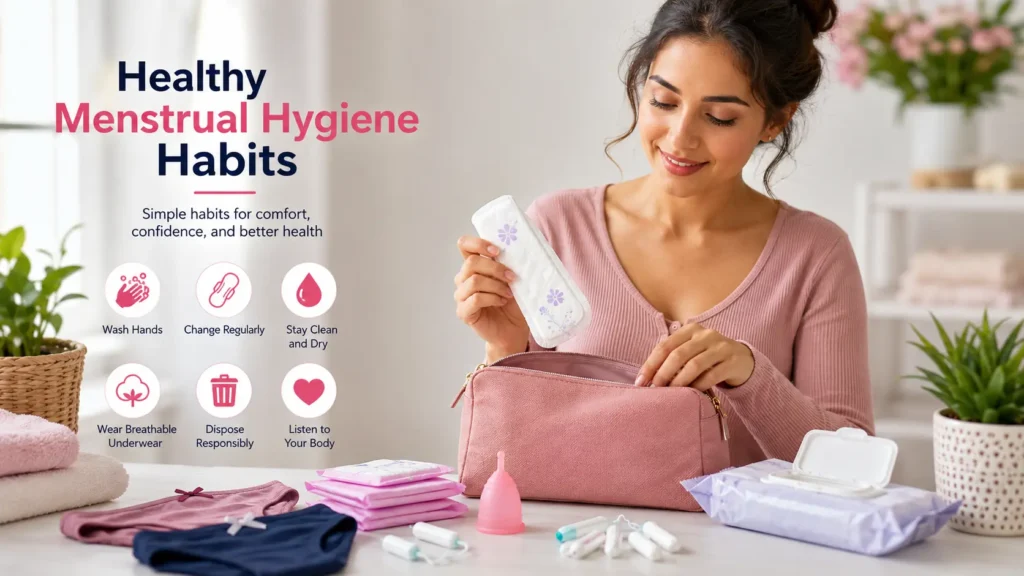
In this guide, you’ll learn:
- Why healthy menstrual hygiene habits matter
- The fundamentals of menstrual hygiene
- How different menstrual products compare
- Practical habits that support comfort and cleanliness
- Common mistakes to avoid
- When it’s appropriate to consult a healthcare professional
By understanding these essential practices, women can make informed decisions that fit their individual needs while supporting their long-term health and confidence.
Understanding Healthy Menstrual Hygiene Habits
Menstrual hygiene refers to the practices women use to safely and comfortably manage their menstrual periods. It includes maintaining personal cleanliness, using menstrual products correctly, disposing of them safely, and paying attention to changes in menstrual health.
Good menstrual hygiene is not about striving for excessive cleanliness or following complicated routines. Instead, it focuses on simple, consistent habits that help maintain comfort and reduce the likelihood of irritation or infection.
Healthy menstrual hygiene involves:
- Using clean menstrual products
- Changing products at recommended intervals
- Washing hands before and after changing products
- Keeping the genital area clean with water or a gentle cleanser
- Wearing breathable underwear
- Properly disposing of used products
- Monitoring unusual symptoms
These habits become especially important during menstruation because menstrual blood, combined with warmth and moisture, can create an environment where bacteria naturally multiply. While the vagina maintains its own healthy balance of bacteria and acidity, poor hygiene practices may increase the risk of irritation or infections.
Why Menstrual Hygiene Matters
Healthy menstrual hygiene contributes to several aspects of physical and emotional well-being.
Supports Reproductive Health
Practicing good hygiene during menstruation may help reduce exposure to harmful bacteria and lower the risk of certain infections. While proper hygiene cannot prevent every medical condition, it supports a healthier environment for the reproductive system.
Improves Daily Comfort
Changing menstrual products regularly helps reduce dampness, odors, and skin irritation. Women often feel more comfortable participating in work, school, exercise, and social activities when they have a reliable hygiene routine.
Helps Protect Skin
Prolonged exposure to moisture may lead to chafing, rashes, or irritation around the vulva and inner thighs. Maintaining dryness with regular product changes can support healthy skin.
Promotes Confidence
Knowing that your menstrual hygiene routine is effective can reduce anxiety about leaks, odors, or discomfort, allowing you to focus on daily life with greater confidence.
Encourages Awareness of Your Cycle
Regularly paying attention to menstrual flow, symptoms, and cycle patterns helps women recognize what is typical for their bodies. This awareness may make it easier to notice changes that deserve medical attention.
Understanding the Female Reproductive System During Menstruation
Menstruation occurs when the uterus sheds its lining after pregnancy does not occur during a menstrual cycle. The blood exits the body through the vagina over several days.
During this time:
- Hormone levels fluctuate.
- Menstrual flow varies from light to heavy.
- The vulva may become more sensitive.
- Moisture levels increase.
- Skin can become more prone to irritation.
Contrary to popular myths, menstrual blood itself is not dirty or toxic. It consists of blood, tissue, mucus, and cells from the uterine lining. The goal of menstrual hygiene is not to remove something harmful but to maintain cleanliness and comfort throughout the menstrual cycle.
Menstrual Products: Understanding Your Options
There is no universally best menstrual product. The ideal choice depends on your comfort, lifestyle, menstrual flow, and personal preferences.
| Product | Best For | Typical Change Frequency |
|---|---|---|
| Sanitary Pads | Beginners, overnight use, heavy flow | Every 3–6 hours |
| Tampons | Swimming, sports, active lifestyles | Every 4–8 hours |
| Menstrual Cups | Long wear, reusable option | Every 8–12 hours (follow manufacturer guidance) |
| Period Underwear | Light flow, backup protection, overnight | Change according to flow and manufacturer instructions |
| Panty Liners | Spotting or very light flow | Every few hours as needed |
Each option has advantages and limitations. Some women also combine products—for example, wearing period underwear as backup protection with a tampon or menstrual cup on heavier days.
Choosing products that feel comfortable and suit your routine often leads to a more positive menstrual experience.
Does Menstrual Hygiene Change Throughout Life?
Yes. Menstrual hygiene needs may evolve as life circumstances change.
Teenagers
Young women may benefit from simple routines and easy-to-use products while learning about their menstrual cycles.
Working Professionals
Busy schedules often require carrying spare menstrual products and planning regular changes throughout the day.
Athletes
Women who exercise frequently may choose products that allow greater freedom of movement while maintaining proper hygiene before and after workouts.
Postpartum Women
Bleeding after childbirth differs from a regular menstrual period. Healthcare providers often recommend specific postpartum hygiene products during recovery.
Women Approaching Menopause
Perimenopause can bring changes in flow, cycle length, and symptom patterns. Flexible menstrual hygiene routines can help women adapt comfortably.
Benefits of Healthy Menstrual Hygiene Habits
Good menstrual hygiene offers practical, everyday benefits that extend beyond managing monthly bleeding.
1. May Help Lower the Risk of Certain Infections
Maintaining cleanliness, changing menstrual products on time, and practicing good hand hygiene may reduce the chance of bacterial growth and irritation. While these habits cannot guarantee prevention of infections, they support a healthier environment for the vulva and vagina.
2. Reduces Unpleasant Odors
A common concern during menstruation is odor. Fresh menstrual blood typically has only a mild scent. Noticeable odors often result when blood remains in contact with menstrual products for extended periods.
Changing products regularly and washing the external genital area with water can help minimize odor naturally. Strong fragrances or scented sprays are generally unnecessary and may irritate sensitive skin.
3. Improves Physical Comfort
A clean, dry environment often feels more comfortable throughout the day. Healthy menstrual hygiene habits may help reduce:
- Chafing
- Skin irritation
- Dampness
- Itching caused by prolonged moisture
- General discomfort during long work or school days
4. Supports an Active Lifestyle
Periods don’t have to interrupt everyday activities. Whether you’re attending classes, traveling, exercising, or working, having a consistent hygiene routine can help you feel prepared and comfortable.
Planning ahead by carrying extra menstrual products and knowing when to change them can make it easier to stay active throughout your cycle.
5. Encourages Better Self-Care
Menstrual hygiene is one aspect of a broader self-care routine. Taking a few moments each day to check in with your body, stay hydrated, eat balanced meals, and get adequate rest may contribute to a more positive menstrual experience.
Many women also find that tracking their menstrual cycle helps them anticipate their period, prepare supplies in advance, and better understand recurring symptoms.
6. Helps Build Healthy Lifelong Habits
Learning healthy menstrual hygiene habits early can create routines that continue throughout adulthood. These habits often become second nature, making period management more convenient and less stressful over time.
Simple practices such as keeping menstrual products readily available, washing hands before and after changing them, and wearing breathable underwear can become part of an overall healthy lifestyle.
Practical Tips for Healthy Menstrual Hygiene Habits
Knowing the basics of menstrual hygiene is important, but putting them into practice consistently is what makes the biggest difference. The following habits can help you stay comfortable, reduce the risk of irritation, and make managing your period easier.
1. Wash Your Hands Before and After Changing Menstrual Products
Your hands can carry bacteria that may transfer to menstrual products or the genital area. Washing your hands with soap and water before and after changing a pad, tampon, or menstrual cup is one of the simplest ways to support good hygiene.
If soap and water aren’t available, using an alcohol-based hand sanitizer until you can wash your hands is a reasonable alternative.
Quick Tip
✔ Wash hands for at least 20 seconds with soap and clean water whenever possible.
2. Change Menstrual Products Regularly
Leaving menstrual products in place for too long may increase moisture, encourage bacterial growth, cause unpleasant odors, and lead to skin irritation.
Although recommendations vary depending on the product and menstrual flow, it’s generally helpful to avoid waiting until a product is completely saturated before changing it.
General Guidelines
| Menstrual Product | Typical Change Interval |
|---|---|
| Pads | Every 3–6 hours |
| Tampons | Every 4–8 hours (never longer than recommended) |
| Menstrual Cups | Every 8–12 hours or according to manufacturer instructions |
| Panty Liners | Every few hours as needed |
| Period Underwear | Change depending on absorbency and menstrual flow |
Heavy-flow days may require more frequent changes than lighter days.
3. Clean the External Genital Area Gently
The vulva (the external genital area) benefits from gentle daily cleaning.
A simple rinse with warm water during bathing is usually enough for most women. If using a cleanser, choose one that is mild and fragrance-free.
Avoid scrubbing the area aggressively, as this may damage delicate skin and increase irritation.
Remember
The vagina is self-cleaning. There is no need to clean inside the vagina.
4. Avoid Vaginal Douching
Many people mistakenly believe douching improves cleanliness. In reality, douching can disrupt the vagina’s natural balance of healthy bacteria and acidity.
This imbalance may increase the likelihood of irritation or certain infections.
For routine menstrual hygiene, external cleansing is generally all that’s needed.
Note: If you’re experiencing unusual discharge, persistent odor, itching, or discomfort, consult a qualified healthcare professional rather than trying to treat symptoms with douches or heavily scented products.
5. Choose Menstrual Products That Suit Your Flow
Using products that match your menstrual flow can improve both comfort and confidence.
For example:
- Light flow days may require only panty liners or light-absorbency products.
- Moderate flow often works well with regular pads, tampons, or menstrual cups.
- Heavy flow may require higher-absorbency products or a combination of methods, such as a menstrual cup with period underwear for backup.
Using products with significantly higher absorbency than necessary isn’t always the best choice. Selecting the right absorbency for your flow helps maintain comfort while reducing unnecessary dryness.
6. Wear Breathable Underwear
Cotton underwear is a popular choice because it allows better airflow and helps reduce trapped moisture.
During menstruation, breathable fabrics may help minimize friction and improve comfort, particularly during warm weather or physical activity.
If your underwear becomes damp from leaks or perspiration, changing into a fresh pair can help keep your skin comfortable.
7. Dispose of Menstrual Products Properly
Used menstrual products should be disposed of responsibly.
Good disposal practices include:
- Wrap used pads or tampons in toilet paper or their original wrapper.
- Place them in a waste bin.
- Follow local disposal recommendations where available.
Avoid flushing pads, tampons, wipes, or applicators down the toilet, as they can clog plumbing and contribute to environmental waste.
Reusable products, such as menstrual cups and period underwear, should be cleaned according to the manufacturer’s instructions before their next use.
8. Stay Hydrated During Your Period
Hydration doesn’t directly affect menstrual hygiene, but it supports overall health during your cycle.
Drinking enough water may help some women feel better during menstruation by supporting normal body functions and reducing feelings of fatigue associated with dehydration.
Consider carrying a reusable water bottle if you’re away from home for long periods.
9. Eat a Balanced Diet
Good nutrition supports your body throughout the menstrual cycle.
Many women benefit from including foods rich in:
- Iron
- Vitamin C
- Whole grains
- Fruits
- Vegetables
- Lean protein
- Healthy fats
Women with heavy menstrual bleeding may be at greater risk of low iron levels. If you’re concerned about iron deficiency or persistent fatigue, consult a healthcare professional.
10. Track Your Menstrual Cycle
Keeping track of your period can help you prepare in advance.
A menstrual tracking app or calendar may help you:
- Predict your next period
- Notice changes in flow
- Track symptoms
- Record cramps or headaches
- Monitor cycle length
Over time, this information can be useful during healthcare appointments if questions arise about your menstrual health.
11. Maintain Good Hygiene While Traveling
Travel doesn’t have to disrupt your menstrual routine.
A small travel kit can make period care much more convenient.
Period Travel Checklist
- Pads or tampons
- Menstrual cup (if used)
- Spare underwear
- Hand sanitizer
- Unscented tissues
- Small disposal bags
- Pain relief medication if recommended by your healthcare provider
Being prepared helps reduce stress when you’re away from home.
12. Exercise if You Feel Comfortable
Many women continue exercising during their periods without any problems.
Light to moderate activities may include:
- Walking
- Yoga
- Stretching
- Swimming (using appropriate menstrual protection)
- Cycling
Listen to your body. If symptoms make exercise uncomfortable, gentle movement or additional rest may be more appropriate.
Healthy Menstrual Hygiene Routine
The following routine offers a simple example of how healthy menstrual hygiene habits can fit into everyday life.
| Time | Healthy Habit |
|---|---|
| Morning | Shower or wash the external genital area and change your menstrual product if needed |
| Before Leaving Home | Pack extra menstrual products and a spare pair of underwear |
| Throughout the Day | Change products according to your flow and wash or sanitize hands |
| After Exercise | Change damp clothing and menstrual products if necessary |
| Evening | Replace menstrual products before bed and stay hydrated |
| Before Sleeping | Use appropriate overnight protection for your flow |
Quick Checklist for Healthy Menstrual Hygiene
Use this checklist as a reminder throughout your cycle.
Daily Checklist
✔ Wash hands before changing menstrual products
✔ Wash hands afterward
✔ Change products regularly
✔ Wear clean, breathable underwear
✔ Stay hydrated
✔ Eat balanced meals
✔ Dispose of products properly
✔ Monitor unusual symptoms
✔ Track your menstrual cycle
✔ Rest when your body needs it
Common Mistakes to Avoid
Even with the best intentions, many women develop habits that may affect comfort or hygiene. Recognizing these common mistakes can help you build a healthier routine.
Waiting Too Long to Change Menstrual Products
One of the most common mistakes is delaying product changes because of work, school, travel, or a busy schedule.
Regular changes help reduce moisture, odor, and discomfort.
Using Highly Scented Feminine Products
Fragranced sprays, powders, and scented washes are often marketed as ways to feel “fresh.”
However, many healthcare professionals recommend avoiding heavily scented intimate products because they may irritate sensitive skin or disrupt the natural vaginal environment.
Unscented products are generally the better choice.
Wearing Damp Clothing for Long Periods
Remaining in sweaty workout clothes or damp underwear after exercise can increase skin irritation.
Changing into dry clothing promptly helps maintain comfort.
Forgetting Hand Hygiene
Touching menstrual products with unwashed hands may introduce bacteria.
Handwashing remains one of the easiest and most effective hygiene practices.
Ignoring Unusual Symptoms
Some changes deserve medical attention rather than home remedies.
Examples include:
- Persistent foul-smelling discharge
- Severe itching
- Fever during menstruation
- Extremely heavy bleeding
- Severe pelvic pain
- Bleeding between periods
- Menstrual changes that continue over multiple cycles
Early evaluation can help identify underlying conditions if needed.
Using the Wrong Product for Your Activity
For example:
- A light liner may not provide enough protection during heavy-flow days.
- Choosing products that don’t match your activity level may increase the chance of leaks.
Adjusting products based on your flow and daily plans often improves comfort.
Believing Common Menstrual Myths
Misinformation about periods remains widespread.
Myth vs. Fact
| Myth | Fact |
|---|---|
| Menstrual blood is dirty. | Menstrual blood is a natural mixture of blood and uterine tissue. |
| Women should avoid bathing during their period. | Regular bathing supports cleanliness and comfort. |
| All menstrual products are the same. | Different products suit different needs, lifestyles, and flow levels. |
| Strong odors are normal during every period. | Mild odor is common, but persistent or unusually strong odor may warrant medical advice. |
| Exercise should always be avoided during menstruation. | Many women can safely continue normal physical activity if they feel comfortable. |
When Should You Seek Medical Advice?
Healthy menstrual hygiene supports overall well-being, but it doesn’t replace medical care when symptoms are concerning.
Consider consulting a qualified healthcare professional if you experience:
- Extremely heavy bleeding that soaks through products very quickly
- Periods lasting significantly longer than usual
- Severe pelvic pain that interferes with daily activities
- Fever while using a tampon
- Persistent itching, burning, or unusual discharge
- Recurring strong vaginal odor
- Missed periods without a known reason
- Sudden changes in your menstrual cycle that continue over time
Seeking medical advice can help identify potential underlying causes and ensure appropriate care.
Frequently Asked Questions
1. What are healthy menstrual hygiene habits?
Healthy menstrual hygiene habits include washing your hands before and after changing menstrual products, changing pads, tampons, or menstrual cups regularly, cleaning the external genital area gently, wearing clean and breathable underwear, disposing of menstrual products properly, and paying attention to any unusual symptoms.
2. How often should I change my sanitary pad?
The ideal timing depends on your menstrual flow, but most sanitary pads should be changed every 3–6 hours. On heavier flow days, you may need to change them more frequently to stay comfortable and reduce prolonged moisture.
3. Is it safe to shower or bathe during my period?
Yes. Showering or bathing during menstruation is both safe and beneficial. Regular bathing helps maintain personal hygiene, keeps the skin clean, and may help some women feel more comfortable during their period.
4. Should I use scented feminine hygiene products?
In most cases, fragrance-free products are the better choice. Strongly scented sprays, powders, wipes, or washes may irritate sensitive skin or affect the natural balance of the vaginal environment. If you’re concerned about odor, changing menstrual products regularly and washing the external genital area with water is usually sufficient.
5. Can I exercise while I’m on my period?
Yes. Many women continue their normal exercise routine during menstruation. Walking, yoga, stretching, swimming (with appropriate menstrual protection), cycling, and strength training are all options if you feel comfortable. Listen to your body and adjust the intensity based on your energy level and symptoms.
6. Are menstrual cups hygienic?
When used and cleaned according to the manufacturer’s instructions, menstrual cups are considered a safe and hygienic option for many women. Proper handwashing before insertion and removal, along with regular cleaning and sterilization between cycles, is essential.
7. What symptoms should not be ignored during a period?
You should consult a healthcare professional if you experience:
- Extremely heavy bleeding
- Severe pelvic pain
- Fever while using a tampon
- Persistent itching or burning
- Strong or unusual vaginal odor
- Bleeding between periods
- Sudden or ongoing changes in your menstrual cycle
While many menstrual symptoms are normal, persistent or severe changes deserve medical evaluation.
8. Does good menstrual hygiene improve overall health?
Healthy menstrual hygiene habits primarily support cleanliness, comfort, skin health, and reproductive well-being. They may also help reduce irritation and encourage greater awareness of your menstrual cycle, making it easier to recognize changes that should be discussed with a healthcare professional.
Key Takeaways
Healthy Menstrual Hygiene Habits at a Glance
- Menstruation is a normal and healthy biological process that deserves proper care, not stigma.
- Wash your hands before and after handling menstrual products.
- Change pads, tampons, and other menstrual products at appropriate intervals.
- Clean only the external genital area with water or a gentle, fragrance-free cleanser.
- Avoid douching and heavily scented feminine hygiene products.
- Choose menstrual products that match your flow, lifestyle, and comfort.
- Wear breathable underwear and change damp clothing promptly.
- Dispose of single-use products responsibly and clean reusable products according to manufacturer instructions.
- Stay hydrated, eat a balanced diet, and track your menstrual cycle to better understand your body.
- Seek medical advice if you notice persistent pain, unusually heavy bleeding, fever, or other concerning symptoms.
Final Thoughts
Healthy menstrual hygiene habits are an essential part of everyday self-care and women’s health. While every woman’s menstrual experience is different, simple, consistent practices can make periods more comfortable, manageable, and less stressful.
Building a routine that includes regular product changes, gentle personal hygiene, proper handwashing, and thoughtful product choices can support your overall well-being throughout every stage of life. These habits are not about striving for perfection—they’re about caring for your body in a way that feels practical, comfortable, and sustainable.
It’s equally important to remember that your menstrual cycle provides valuable insight into your overall health. Paying attention to changes in your flow, symptoms, or cycle patterns can help you recognize when it’s time to seek professional advice. If you experience persistent discomfort, unusually heavy bleeding, severe pain, or other symptoms that interfere with daily life, a qualified healthcare professional can help determine the underlying cause and recommend appropriate care.
Finally, open conversations about menstrual health help replace myths with accurate information. By understanding healthy menstrual hygiene habits and sharing reliable knowledge, women can make informed choices that support not only their reproductive health but also their confidence, comfort, and quality of life.