
Introduction
Modern life rarely slows down. Between work responsibilities, family commitments, social obligations, and the constant flow of digital notifications, many women find it difficult to set aside time for genuine relaxation. While professional spa visits can provide a welcome escape, they aren’t always practical or affordable to enjoy regularly.
The good news is that a calming spa experience doesn’t have to happen outside your home. With thoughtful preparation and a few intentional habits, almost any space can become a peaceful retreat that encourages relaxation, mindfulness, and self-care.
Learning how to create a relaxing home spa experience isn’t about recreating an expensive luxury resort. Instead, it’s about designing a calming environment that helps you slow down, disconnect from daily stress, and focus on caring for both your body and mind.
Whether you have fifteen minutes before bed or an entire afternoon to yourself, a home spa routine can become a meaningful part of your wellness habits. Some people find that these moments of intentional self-care may help reduce feelings of stress, encourage better sleep, improve their mood, and create opportunities to reconnect with themselves after busy days.
In this guide, you’ll learn:
- What defines a home spa experience
- Why home spa rituals have become an important part of modern self-care
- The realistic benefits they may offer
- How to prepare your environment for maximum relaxation
- Practical ideas that suit different schedules and budgets
The goal isn’t perfection—it’s creating a calming ritual that fits naturally into your lifestyle.
Understanding a Home Spa Experience
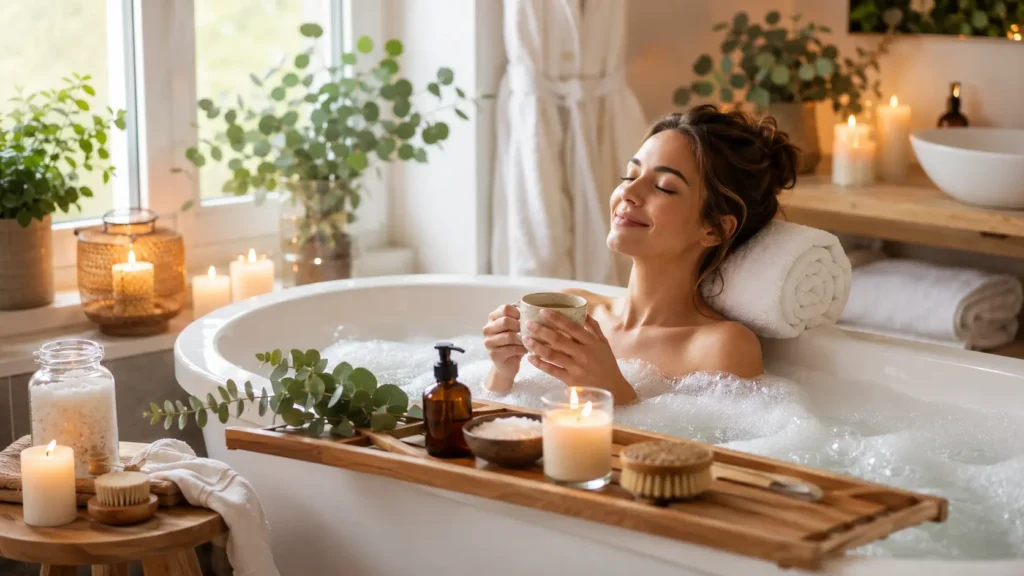
A home spa experience is a personalized self-care ritual that combines a relaxing environment with wellness-focused activities designed to help you unwind. Unlike a quick shower or an ordinary skincare routine, a home spa encourages you to intentionally slow down and be present.
Rather than focusing on appearance alone, the experience supports overall well-being by creating space for physical comfort, mental relaxation, and emotional balance.
Many home spa routines include activities such as:
- Taking a warm bath
- Enjoying a soothing shower ritual
- Applying nourishing face masks
- Moisturizing the skin
- Gentle stretching
- Deep breathing exercises
- Listening to calming music
- Practicing mindfulness
- Using relaxing scents like lavender or eucalyptus
- Drinking herbal tea while disconnecting from screens
The exact routine varies from person to person. Some women prefer a quiet evening bath with a book, while others enjoy incorporating meditation, skincare, or gentle yoga into their spa session.
The most effective home spa routines are those that feel enjoyable rather than overwhelming. Even simple rituals performed consistently can become valuable moments of self-care.
Why Home Spa Rituals Matter
Self-care is often misunderstood as something indulgent or optional. In reality, caring for your physical and emotional well-being is an important part of maintaining a healthy lifestyle.
Periods of ongoing stress may affect sleep quality, concentration, mood, and even motivation to care for yourself. Although a home spa isn’t a medical treatment, creating regular opportunities to relax can support healthier daily habits.
A home spa experience encourages you to:
- Pause from constant multitasking
- Reduce sensory overload
- Practice mindfulness
- Establish healthy routines
- Create healthy boundaries around personal time
- Focus on physical comfort and relaxation
For many women, these small rituals become reminders that self-care doesn’t always require expensive products or lengthy appointments. Often, it’s the intentional act of slowing down that makes the biggest difference.
Home Spa vs. Professional Spa
Understanding the differences helps set realistic expectations.
| Home Spa | Professional Spa |
|---|---|
| Convenient and available anytime | Requires scheduling appointments |
| Budget-friendly | Often more expensive |
| Personalized to your preferences | Services follow spa menu offerings |
| Encourages regular self-care habits | Usually occasional visits |
| Can be as simple or elaborate as desired | Includes professional treatments |
A home spa won’t replace specialized treatments performed by trained professionals. However, it can become a sustainable wellness practice that complements occasional professional spa visits.
Benefits of Creating a Relaxing Home Spa Experience
A thoughtfully planned home spa routine offers more than temporary comfort. While individual experiences vary, many people find these rituals beneficial for both physical and emotional well-being.
1. Encourages Stress Relief
One of the primary reasons people create home spa routines is to unwind after demanding days.
Warm water, calming scents, quiet surroundings, and mindful breathing may help lower feelings of tension and encourage relaxation.
Creating intentional quiet time also provides an opportunity to mentally step away from work, responsibilities, and digital distractions.
2. Supports Better Sleep Habits
Many evening spa rituals naturally become part of a healthy bedtime routine.
Activities such as:
- Taking a warm bath
- Dimming lights
- Reducing screen exposure
- Practicing deep breathing
- Reading quietly
can help signal to your body that it’s time to wind down before sleep.
Although everyone’s sleep patterns differ, consistent evening relaxation habits may contribute to improved sleep quality over time.
3. Promotes Mindful Self-Care
Daily routines often become automatic. A home spa invites you to slow down and pay attention to how you’re feeling physically and emotionally.
Instead of rushing through skincare or showering, you intentionally focus on the present moment.
This mindful approach may help create greater awareness of personal needs, encouraging healthier long-term self-care habits.
4. Provides Time Away From Screens
Many adults spend hours each day looking at phones, computers, or televisions.
A home spa session offers a valuable opportunity to disconnect from digital devices and reduce information overload.
Even thirty minutes without notifications can feel surprisingly refreshing.
Quick Tip: Consider placing your phone in another room or enabling “Do Not Disturb” mode during your home spa session to minimize interruptions and help you stay fully present.
5. Can Support Healthy Skin Care Habits
Although a home spa isn’t designed to solve skin concerns, it encourages consistent habits that support healthy-looking skin.
Many routines include:
- Gentle cleansing
- Hydration
- Moisturizing
- Facial massage
- Regular exfoliation (when appropriate)
These practices can complement an overall skincare routine while also making the experience feel relaxing rather than rushed.
6. Encourages Emotional Well-Being
Taking dedicated time for yourself can help reinforce the idea that your well-being deserves attention.
For women balancing careers, caregiving responsibilities, studies, or busy households, even a short period of uninterrupted relaxation may provide valuable mental space to recharge.
It’s not about escaping responsibilities—it’s about creating healthy moments of restoration that can make everyday demands feel more manageable.
7. Fits Nearly Any Budget
One of the greatest advantages of a home spa is its flexibility.
You don’t need luxury products or expensive equipment to enjoy a calming experience.
Simple items such as:
- Soft towels
- Warm water
- Comfortable lighting
- Herbal tea
- Gentle music
- A favorite moisturizer
can create an inviting atmosphere without significant expense.
This makes home spa rituals accessible for many lifestyles and budgets.
Quick Summary: Benefits at a Glance
| Benefit | How It May Help |
|---|---|
| Stress relief | Encourages relaxation after busy days |
| Better sleep habits | Supports a calming bedtime routine |
| Mindfulness | Helps you slow down and stay present |
| Digital detox | Reduces screen-related distractions |
| Skin care support | Encourages consistent self-care habits |
| Emotional wellness | Creates space for rest and reflection |
| Budget-friendly | Makes regular self-care more accessible |
Practical Tips for Creating a Relaxing Home Spa Experience
A memorable home spa session isn’t about owning expensive products or having a luxurious bathroom. It’s about creating an environment that helps you slow down, engage your senses, and enjoy intentional moments of self-care.
The following steps can be adapted to suit your schedule, available space, and personal preferences.
Step-by-Step Guide to Creating a Relaxing Home Spa Experience
Step 1: Set Aside Dedicated Time
One of the biggest obstacles to self-care is feeling like there’s never enough time.
Rather than waiting for a completely free day, schedule your home spa session just as you would any important appointment. Even 20 to 30 uninterrupted minutes can feel restorative.
Some women enjoy a weekly spa evening, while others prefer shorter relaxation sessions several times a week.
Ask yourself:
- When do I usually feel most stressed?
- What time of day allows the fewest interruptions?
- How much time can I realistically commit?
Choosing a routine you can maintain consistently is often more beneficial than planning elaborate sessions that rarely happen.
Step 2: Declutter Your Space
A cluttered environment can make it harder to relax.
You don’t need to deep-clean your entire home, but spending a few minutes tidying the area where you’ll unwind can create a noticeably calmer atmosphere.
Consider:
- Folding towels neatly
- Clearing countertops
- Putting away laundry
- Organizing skincare items
- Removing unnecessary clutter
A clean, organized space often feels more peaceful and inviting.
Quick Tip: Place everything you’ll need—towels, skincare products, water, tea, or a book—within easy reach before you begin. This helps you avoid interrupting your relaxation.
Step 3: Create a Calming Atmosphere
The environment plays a major role in how relaxing your spa experience feels.
Think about engaging multiple senses rather than focusing on appearance alone.
Lighting
Soft lighting encourages a cozy atmosphere.
Ideas include:
- Warm lamps
- Flameless LED candles
- Natural evening light
- Dimmed overhead lights
Avoid overly bright lighting whenever possible.
Sound
Background sounds can help mask household noise.
Popular options include:
- Gentle piano music
- Nature sounds
- Ocean waves
- Rainfall recordings
- Soft instrumental playlists
If silence helps you relax, that’s perfectly fine too.
Scents
Many people associate pleasant scents with relaxation.
Common spa-inspired fragrances include:
- Lavender
- Chamomile
- Eucalyptus
- Vanilla
- Bergamot
- Sandalwood
If using essential oils, always follow safety instructions and avoid direct skin application unless they are properly diluted.
Those with asthma, allergies, migraines, or fragrance sensitivities may prefer an unscented environment.
Temperature
Comfort matters.
A room that’s too warm or too cold can distract from relaxation.
Aim for a comfortable temperature and keep a soft robe or blanket nearby if needed.
Step 4: Prepare a Relaxing Bath or Shower
You don’t need a large soaking tub to enjoy a spa experience.
Both baths and showers can become calming rituals.
If You’re Taking a Bath
You might include:
- Warm (not excessively hot) water
- Bath salts
- Oatmeal soaks
- Gentle bubble bath
- Bath oils designed for safe bathing
- A bath pillow
- A rolled towel for neck support
Spend time soaking rather than rushing.
If You Prefer a Shower
Transform it into a spa-like experience by:
- Using warm water
- Taking slow, mindful breaths
- Applying a gentle body scrub
- Massaging shampoo into your scalp
- Finishing with a nourishing body moisturizer
Even a simple shower can become a relaxing ritual when approached mindfully.
Step 5: Refresh Your Skin
After cleansing, many people enjoy dedicating a few extra minutes to skincare.
A simple routine may include:
- Gentle cleanser
- Face mask (optional)
- Toner (if part of your usual routine)
- Serum
- Moisturizer
- Lip balm
There’s no need to use numerous products.
Consistency and choosing products suitable for your skin type are generally more important than having an extensive routine.
Note: If you have sensitive skin or a skin condition, introduce new skincare products cautiously and consider consulting a dermatologist if you have concerns.
Step 6: Practice Gentle Relaxation
A home spa experience doesn’t have to focus only on skincare.
Adding calming activities can enhance the experience.
Consider:
- Five minutes of deep breathing
- Guided meditation
- Gentle stretching
- Light yoga
- Progressive muscle relaxation
- Quiet journaling
- Reading a favorite book
These activities may help shift your attention away from daily stressors and encourage a calmer mindset.
Step 7: Stay Hydrated
Relaxation often feels even better when your body is well hydrated.
Many people enjoy sipping:
- Herbal tea
- Warm lemon water
- Fruit-infused water
- Plain water
Keeping a drink nearby also encourages you to slow down and extend the experience.
Step 8: Disconnect From Technology
Constant notifications can quickly interrupt relaxation.
Consider creating a “screen-free” spa session by:
- Turning off notifications
- Activating Do Not Disturb mode
- Leaving your phone in another room
- Avoiding emails and social media
Instead, focus on being present in the moment.
Step 9: Wear Comfortable Clothing
Once your bath or shower is finished, extend the relaxing feeling.
Choose clothing that feels soft and comfortable, such as:
- Cotton pajamas
- A plush robe
- Cozy socks
- Breathable loungewear
Small details like these help maintain the calming atmosphere you’ve created.
Sample 60-Minute Home Spa Routine
| Time | Activity |
|---|---|
| 5 minutes | Tidy your space and prepare everything you’ll need |
| 10 minutes | Light stretching or deep breathing |
| 20 minutes | Warm bath or mindful shower |
| 10 minutes | Skincare routine |
| 10 minutes | Herbal tea and quiet reading or meditation |
| 5 minutes | Journaling or gratitude reflection |
This routine can easily be shortened or expanded depending on your schedule.
Home Spa Essentials Checklist
You don’t need every item on this list, but it can serve as inspiration.
Comfort
- Soft towels
- Bathrobe
- Slippers
- Cozy blanket
Relaxation
- Candles or flameless candles
- Relaxing music
- Herbal tea
- Comfortable pillow
Bath
- Gentle cleanser
- Body wash
- Bath salts (optional)
- Bubble bath (optional)
- Body lotion
Skincare
- Face cleanser
- Moisturizer
- Face mask
- Lip balm
Wellness
- Water bottle
- Journal
- Book
- Meditation app (optional)
Choose only what supports your personal routine.
Morning vs. Evening Home Spa
| Morning Spa | Evening Spa |
|---|---|
| Helps you begin the day feeling refreshed | Helps you unwind before bedtime |
| Energizing shower | Warm relaxing bath |
| Bright natural light | Soft ambient lighting |
| Refreshing citrus scents | Calming lavender or chamomile scents |
| Gentle stretching | Meditation or deep breathing |
| Light moisturizer | Richer nighttime skincare routine |
Both options can be beneficial depending on your lifestyle and goals.
Customizing Your Home Spa Experience
There’s no single “right” way to enjoy a home spa. Your routine should reflect your preferences, available time, and current needs.
For Busy Days (15–20 Minutes)
- Warm shower
- Moisturizer
- Herbal tea
- Five minutes of deep breathing
For a Weekend Reset (60–90 Minutes)
- Declutter your space
- Warm bath
- Hair care
- Face mask
- Gentle stretching
- Journaling
- Reading
- Relaxing music
For Cold Weather
- Warm blankets
- Cozy socks
- Hot herbal tea
- Rich moisturizer
- Warm bath
For Summer
- Cool facial mist
- Lightweight moisturizer
- Refreshing shower
- Fresh fruit-infused water
- Light cotton robe
Adapting your routine to the season can make it feel more comfortable and enjoyable.
Signs Your Home Spa Routine Is Working
A successful home spa session doesn’t need dramatic results.
Instead, you may notice subtle improvements such as:
- Feeling calmer afterward
- Less mental clutter
- Better ability to unwind before bed
- Increased consistency with self-care
- Greater appreciation for quiet time
- Feeling refreshed rather than rushed
Remember that everyone’s experience is different, and relaxation may look different from one person to another.
Common Mistakes to Avoid
Even simple routines can become less enjoyable if they’re overly complicated. Avoid these common pitfalls.
| Mistake | Better Approach |
|---|---|
| Trying to do too much | Keep your routine simple and realistic |
| Using water that’s too hot | Choose comfortably warm water |
| Constantly checking your phone | Enjoy uninterrupted quiet time |
| Buying unnecessary products | Use what you already have when possible |
| Skipping hydration | Drink water or herbal tea during your session |
| Expecting instant stress relief | Focus on consistency rather than immediate results |
| Copying someone else’s routine | Build a routine that fits your own needs |
Remember: A home spa is meant to reduce stress—not create another task to perfect. The most effective routine is one you genuinely enjoy and can return to regularly.
Frequently Asked Questions
1. How often should I have a home spa day?
There’s no single schedule that works for everyone. Some people enjoy a short home spa routine once or twice a week, while others prefer a longer session every weekend. Even spending 15–20 minutes on intentional self-care can be a meaningful addition to your wellness routine when practiced consistently.
2. Do I need expensive products to create a relaxing home spa experience?
No. A relaxing home spa experience is more about creating a peaceful environment than purchasing luxury products. Soft towels, comfortable lighting, a warm bath or shower, gentle skincare products you already use, calming music, and a quiet atmosphere are often enough to create a restorative experience.
3. Is a shower as effective as a bath for a home spa routine?
Yes. While many people associate spas with soaking baths, a mindful shower can be equally relaxing. Taking your time, using warm water, focusing on slow breathing, and following with moisturizing skincare can help create a spa-like experience without a bathtub.
4. Can a home spa help reduce stress?
Many people find that home spa rituals help them feel calmer and more relaxed. Activities such as warm baths, mindfulness, gentle stretching, and disconnecting from digital devices may help reduce feelings of stress. However, a home spa is not a substitute for professional mental health care if stress becomes persistent or overwhelming.
5. Which scents are commonly used in a home spa?
Popular choices include:
- Lavender
- Chamomile
- Eucalyptus
- Vanilla
- Bergamot
- Sandalwood
Fragrance preferences vary from person to person. If you have allergies, asthma, migraines, or fragrance sensitivities, an unscented environment may be a better option.
6. How long should a home spa session last?
There’s no ideal duration. Your session can last anywhere from 15 minutes to 90 minutes depending on your schedule.
For example:
- 15–20 minutes: Quick relaxation after work
- 30–45 minutes: Bath or shower with skincare
- 60–90 minutes: Complete self-care afternoon including mindfulness, journaling, and relaxation
The most important factor is choosing a routine you can maintain consistently.
7. Can I include skincare treatments in my home spa routine?
Absolutely. A home spa is a great opportunity to slow down and enjoy your regular skincare routine.
You might include:
- Gentle cleansing
- Moisturizing
- Hydrating face masks
- Lip care
- Hand and foot care
Avoid introducing multiple new skincare products at the same time, especially if you have sensitive skin.
8. When should I speak with a healthcare professional?
While home spa routines can support relaxation and self-care, they are not intended to diagnose or treat health conditions.
Consider consulting a qualified healthcare professional if you experience:
- Persistent sleep problems
- Ongoing stress or anxiety that affects daily life
- Chronic pain
- Skin concerns that worsen or do not improve
- Allergic reactions to skincare or bath products
Professional guidance can help determine the most appropriate approach for your individual needs.
Key Takeaways
- A relaxing home spa experience focuses on creating intentional time for self-care, not recreating a luxury resort.
- You don’t need expensive products—comfort, simplicity, and consistency often matter more.
- A calming environment with soft lighting, relaxing sounds, comfortable temperatures, and minimal distractions can enhance the experience.
- Warm baths or mindful showers, gentle skincare, hydration, and relaxation techniques can work together to support overall well-being.
- Small, regular self-care rituals are often easier to maintain than elaborate, occasional spa days.
- Personalize your routine to suit your schedule, lifestyle, and preferences.
- Home spa sessions may help encourage relaxation and healthier self-care habits, but they are not a replacement for professional medical or mental health care when needed.
Home Spa Routine at a Glance
| Step | What to Do | Why It Matters |
|---|---|---|
| 1 | Set aside uninterrupted time | Helps you focus on relaxation |
| 2 | Tidy your space | Creates a calmer environment |
| 3 | Adjust lighting, sound, and scent | Enhances the atmosphere |
| 4 | Enjoy a warm bath or mindful shower | Encourages physical relaxation |
| 5 | Complete a simple skincare routine | Supports healthy self-care habits |
| 6 | Practice mindfulness or gentle stretching | Promotes mental relaxation |
| 7 | Hydrate with water or herbal tea | Supports overall wellness |
| 8 | Disconnect from digital devices | Reduces distractions and mental clutter |
Myth vs. Fact
| Myth | Fact |
|---|---|
| A home spa requires expensive products. | Simple, affordable items can create a relaxing experience. |
| You need several hours to benefit. | Even 15–30 minutes of intentional self-care can be worthwhile. |
| A home spa is only about skincare. | It can include relaxation, mindfulness, stretching, reading, or quiet reflection. |
| Every home spa routine should look the same. | The best routine is one that matches your personal preferences and lifestyle. |
| More products mean better results. | A simple, consistent routine is often easier to maintain and enjoy. |
Infographic Idea
Title: 8 Steps to Create a Relaxing Home Spa Experience
Visual flow:
- Schedule Time
- Declutter Your Space
- Set the Mood (Light • Music • Scents)
- Warm Bath or Shower
- Gentle Skincare
- Relaxation or Meditation
- Hydrate
- Unplug and Recharge
This infographic can serve as a quick reference for readers who want to build a simple, repeatable self-care routine.
Final Thoughts
Learning how to create a relaxing home spa experience is less about luxury and more about intention. By setting aside time to slow down, creating a peaceful environment, and choosing activities that genuinely help you relax, you can build a self-care ritual that fits comfortably into everyday life.
A home spa doesn’t need to be elaborate to be meaningful. Whether your routine lasts 20 minutes after a busy workday or becomes a weekend wellness tradition, consistent moments of relaxation can support healthier habits, encourage mindfulness, and provide valuable opportunities to recharge.
Remember that self-care looks different for everyone. Experiment with different elements—such as soothing music, warm baths, gentle stretching, journaling, or calming scents—to discover what helps you feel your best. The goal isn’t to achieve perfection but to create a sustainable routine that leaves you feeling refreshed and cared for.
If you’re experiencing ongoing stress, sleep difficulties, or health concerns that don’t improve with lifestyle changes, don’t hesitate to seek advice from a qualified healthcare professional. A home spa can be a valuable part of a healthy wellness routine, but it works best alongside other healthy habits and appropriate professional care when needed.
By making relaxation a regular part of your schedule rather than an occasional indulgence, you can cultivate a more balanced approach to self-care—one that supports your overall well-being today and for years to come.